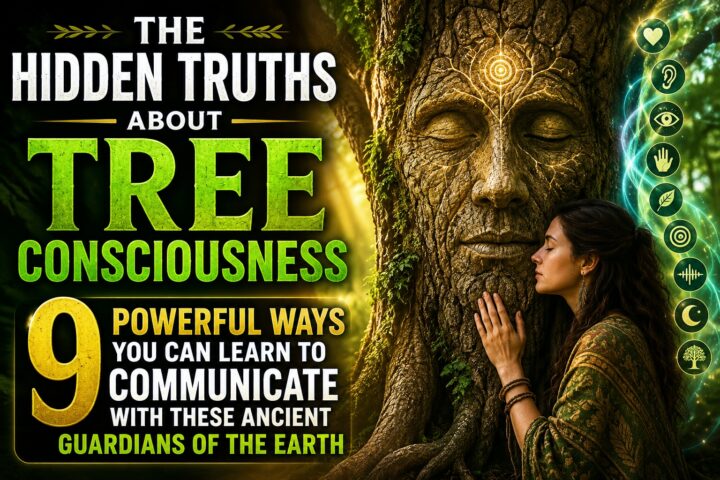
The Hidden Truth: How to Communicate with Trees
Have you ever walked through a forest and felt like you were being watched? According to ancient spiritual wisdom and modern ecological science, that feeling isn’t your imagination. Trees are not just static parts of the landscape; they are sentient, conscious beings that form an intricate social network.
In this guide, we explore the hidden truths about tree consciousness and the nine powerful ways you can learn to communicate with these ancient guardians of the earth.
The Science of the “Wood Wide Web”
Before diving into spiritual practices, it’s important to understand that science has already confirmed trees communicate. Through a network of fungi called mycelium, trees send chemical signals, share nutrients, and warn their neighbors of incoming pests or environmental dangers.
While science calls this “adaptation,” spiritual wisdom views it as a form of collective awareness. Trees are interconnected, and when you enter a forest, the first tree you encounter often “alerts” the others of your presence.
9 Ways to Communicate with Trees
Learning the language of trees requires patience, intention, and a shift in perspective. Here are nine methods to deepen your connection with nature.
1. Silent Meditation
The most fundamental way to connect is to sit at the base of a tree and enter a meditative state. Use deep breath work to quiet your mind. As you meditate, observe any sudden thoughts or emotions that arise. These are often not your own, but the tree’s energy aligning with yours.
2. Touch and Energy Exchange
Trees carry a strong energetic current within their trunk and sap. Wrap your arms around a tree or place your palms against the bark. You may feel a tingling sensation, warmth, or even a subtle pulse. This is the life force of the tree connecting with your own.
3. Listening to Nature Sounds
Each rustle of leaves or creaking branch carries a vibration—and every vibration is a message.
- Gentle rustling: A sign of peace and welcoming.
- Sudden, strong movements: A sign of urgency, resilience, or discomfort with your presence.
4. Breath Synchronization
Stand under a tree and observe the rhythm of its branches swaying in the wind. Align your breathing with this movement:
- Breathe in as the branches sway upward.
- Breathe out as they sway downward.
- Hold your breath if they sway sideways.
This creates a shared rhythm that aligns your body with the tree’s natural flow.
5. Offering Respect and Gifts
Trees respond to gratitude. Offer a small token of respect, such as water, flowers, or a natural stone, at the roots. State your intention clearly and sit quietly. Many people report a heightened sense of calmness or “gratitude” flowing back from the tree after this exchange.
6. Dream Connection
If you are seeking guidance, spend time with a specific tree before bed. Meditate under it or hug it, and then mentally ask the tree to visit you in your dreams. Tree messages are often symbolic:
- Falling leaves: A message to release something in your life.
- Blossoming flowers: A sign of renewal.
- Broken branches: A warning of coming difficulty.
7. Verbal or Mental Dialogue
Don’t be afraid to speak to a tree, either out loud or in your mind. Ask questions or share your feelings. While trees don’t use human words, they answer through impressions, sudden thoughts, or physical responses, such as a tree shedding a leaf immediately after you ask for guidance.
8. Observing Physical Signs and Patterns
Patterns in the forest are rarely coincidental.
- Alignment: Trees growing in a straight line represent a message of alignment for your life.
- Portals: Two trees of the same species growing close together create a natural portal. Touching both simultaneously while stating an intention is a powerful spiritual practice.
- Opposing Growth: Trees facing each other signify divine guidance and that you are not alone.
9. Symbolic Interpretation of Encounters
Pay attention to the animals and elements around a tree. A bird landing calmly on a branch while you are present is a sign of protection. A sudden gust of wind often symbolizes a necessary change. By learning this symbolic language, you can interpret the indirect messages trees send every day.
Summary:
Interacting with trees is a journey of mutual respect. When you perform these practices with consistency and intention, you begin to see that the forest is a living, breathing conversation. Trees are ready to share their wisdom; all you have to do is learn to listen.